Looking for eco-friendly moving solutions? This room-by-room crate guide offers practical tips for sustainable packing, ensuring a smooth and green transition.
Estimating Your Moving Crate Needs with ReloCrate
By Xavier Lee, ReloCrate
Moving is a big undertaking, and one of the first decisions you’ll make is how many moving crates to get. That choice affects how organized and efficient your move will be. In this guide, we break down crate needs by room, cover common packing strategies, explain crate sizes, and share practical tips to make your move smoother. Knowing how to estimate crates room-by-room helps you avoid last-minute runs for extra boxes and keeps everything easier to unpack. For a full range of purpose-built options, consider exploring dedicated moving crate solutions.
Before you order crates, spend an hour walking through your home and making a simple inventory for each room. Note large items that won’t go in crates and smaller items that will, and jot down any fragile collections or unusually shaped pieces. This quick audit lets you place a more accurate order, reduce extra handling on moving day, and prioritize what to pack first.
Room-by-Room Crate Guide
Every home is different, but this quick guide gives realistic estimates for how many crates you’ll likely need in each living space. Use it to plan your orders and organize packing by room. Below are practical, item-level suggestions you can adapt to your possessions and lifestyle.
Home Size
Estimated Crates
Recommended Sizes
Studio / 1-Bedroom
15-20
Small and Medium
2-Bedroom
20-30
Medium and Large
3-Bedroom
30-40
Medium and Large
4-Bedroom
40-50
Large
5+ Bedroom
50+
Large
Studio / 1-Bedroom
Plan on about 15–20 crates. Focus on small and medium sizes: small for heavy items like books and tools, medium for clothing, kitchen gear, and a few small furniture pieces. Using mostly smaller crates helps you stack and carry more easily while keeping like items grouped together.
Typical small-crate items: books, DVDs, canned goods, power tools, small hardware bins.
Typical medium-crate items: folded clothing, pots and pans, small kitchen appliances, boxed pantry items.
Tip: For studios, consider packing daily essentials in a clearly labeled crate you keep with you so the first evening in your new place is comfortable and stress-free.
2-Bedroom
Expect roughly 20–30 crates, depending on how much you own. A mix of medium and large crates works best: mediums for everyday items and kitchenware, larges for bedding, small appliances, and bulkier decor. Separating crates by room speeds up unpacking at your new place.
Living room: 8–12 crates (mix of small for books/media, medium for decor, large for blankets, throws).
Kitchen: 8–12 crates (medium for dishes and cookware, small for utensils and glassware with padding).
Bedrooms: 6–12 crates total (medium for clothing, large for comforters and extra pillows).
Label both the room and priority level (e.g., Kitchen 1 — Unpack First) to help movers and helpers know which crates to place where on arrival.
3-Bedroom
For a 3-bedroom home, estimate about 30–40 crates. Use medium crates for most household items and large crates for bigger pieces or seasonal items. Being deliberate about which items go in which crate—room labels and simple inventories—makes settling in faster.
Master bedroom: 6–10 crates for clothing, bedding, shoes, and accessories.
Other bedrooms: 4–8 crates each, depending on size and contents (toys, clothes, hobby equipment).
Shared spaces: 12–16 crates split between living, dining, and kitchen for dishes, media, and linens.
Consider grouping similar items together across rooms (e.g., all lighting, all linens) so unpacking one category at a time is efficient.
4-Bedroom
A 4-bedroom home typically needs about 40–50 crates. Large crates will be essential for heavier and bulkier pieces. Don’t just toss things in—sort by room and label clearly so movers and family know which crates get unloaded first.
Break down large moves into stages: pack nonessential rooms first (guest rooms, storage areas), then primary living areas last. This sequencing keeps core items accessible until the move date and reduces disruption the day of the move.
5+ Bedroom
If you’re moving from a 5+-bedroom home, plan for 50 or more crates. Large sizes are the most practical choice here due to the volume of furniture and household items. Protect fragile items with padding and wraps to keep them safe during transit.
For very large homes, consider a short-term rental of additional crates so you can stagger packing and avoid overwhelming yourself the week before moving day. Labeling systems and a central inventory spreadsheet or list will save hours when unpacking.
General Packing Strategies
Good habits make unpacking simple. Use these core strategies to keep your move organized and efficient:
Label everything: Clear labels save time. Note the room and a short inventory on each crate so you can prioritize what to unload first.
Pack by room: Keep items from the same room together—this prevents mix-ups and speeds up setup in your new home.
Overestimate: It’s smarter to have a few spare crates than to run out mid-pack.
Distribute weight: Pack heavy items low and spread weight across several crates to make lifting safer and easier.
Protect fragile items: Wrap delicate pieces in bubble wrap, towels, or blankets and place them in crates with cushioning to prevent damage.
Additional practical notes to follow these rules:
Use color-coded tape or markers per room to quickly identify crate destinations in a crowded truck.
Attach a simple inventory card to each crate listing the main contents; this can be a handwritten note or a printed label.
When possible, keep a few open crates available during the last 48 hours for items you still need to collect rather than mixing them with fully packed crates.
Applying these simple rules will reduce stress on moving day and help you get settled faster.
Additional Tips
Use vertical space: Stack crates securely to maximize space in the truck or storage area—stacking saves room and reduces trips.
Separate essentials: Pack a crate with immediate-need items (toiletries, a few changes of clothes, important documents, basic kitchenware) so you can function right away at your new place.
Other small changes with big payoff:
Pack a small toolbox and a basic cleaning kit in a labeled crate so you can make minor repairs or clean surfaces in the new home without searching through many boxes.
Keep bedding and a set of towels in one clearly marked crate per bedroom so beds can be made immediately.
If you’re transporting plants, plan a few empty crates or breathable containers that give plants space and prevent crushing during loading.
What Are Moving Crates and Why Are They Essential for Your Move?
Moving crates are sturdy, reusable containers built for transporting items during a relocation. They outperform standard cardboard boxes by being stronger, easier to stack, and better for repeated use. Crates protect fragile items, simplify loading, and are a more sustainable option for frequent movers. Pairing crates with professional moving help can remove much of the logistical stress from your move.
Crates are also useful after a move: they can act as temporary storage, help organize seasonal items, or serve as durable carriers for storage unit transport. Their rigid walls and stackability make them especially helpful when loading tight trucks or storage spaces.
How Many Moving Crates Do I Need for Each Room? Room-by-Room Crate Quantity Estimates
The number of crates you need depends on each room’s size and how many belongings you plan to move. Use the room averages below to refine your total estimate. Remember that personal habits and hobbies (collections, home offices, sports equipment) can significantly increase crate counts for certain rooms.
How Many Crates Are Needed for Living Rooms, Kitchens, and Bedrooms?
As a rule of thumb: living rooms often need about 10–15 crates, kitchens 10–20 (depending on cookware and appliances), and bedrooms about 10–15 crates each. Add these up alongside your other rooms to get a close estimate.
Suggested breakdowns to fine-tune those ranges:
Living room: Allocate small crates for books, media, and small decor; medium crates for cushions and electronics accessories; large crates for throws, lamps, or boxed items. If you have a large media collection or many decorative pieces, plan for the higher end of the range.
Kitchen: Group plates and glassware together with towels or bubble wrap between items; use medium crates for cookware and pots; reserve a couple of small crates for silverware, utensils, and spices. For larger appliances such as microwaves or mixers, either use a specially sized crate or pack them in a large crate with padding.
Bedrooms: Pack shoes in smaller crates or shoe organizers inside medium crates; garments can be folded into medium crates or kept on hangers using wardrobe-style crates if available. Bedding and off-season clothing fit well in large crates.
What Are the Moving Crate Requirements for Home Offices and Commercial Spaces?
Home offices and commercial spaces will vary, but budget an extra 5–10 crates for office supplies, documents, and equipment. Organize by category and keep frequently used items accessible. If you’re moving a business, consider exploring commercial moving solutions to streamline the process.
Packing suggestions for offices:
Use small crates for stationery, cables, and accessories.
Use medium crates for books, binders, and smaller office equipment.
Use large crates for monitors, printers (with padding), and bulk supplies like paper reams.
For sensitive documents, separate a secured crate and clearly mark it as priority. If you store client files or legal papers, keep an inventory and ensure access during transit.
Which Moving Crate Sizes Should You Choose? Selecting the Right Crate for Your Needs
Picking the right crate sizes cuts down on wasted space and makes lifting safer. Match crate size to the items you’re packing and the rooms they come from.
What Are the Dimensions and Weight Limits of Small, Medium, and Large Crates?
Typical dimensions to consider: small crates (roughly 1′ x 1′ x 1′) are great for heavy items like books; medium crates (about 2′ x 2′ x 2′) are versatile for clothes, kitchen items, and smaller decor; large crates (around 3′ x 2′ x 2′) work well for bulky items such as small furniture and bedding.
Weight guidance: keep small crates heavy but manageable, and ensure medium and large crates are not overloaded. Spread heavy items across multiple crates rather than one overloaded container to reduce strain and lower the risk of damage or injury.
How to Match Crate Size to Different Room Contents and Item Types?
Think about volume and fragility. Closets and bathrooms usually need fewer and smaller crates, while living areas and bedrooms often need more medium or large crates. Let furniture pieces and the size of your items guide your choices.
Practical matching tips:
Pack dishes and glassware in medium crates with padding and use small crates for flatware and small gadgets.
Use large crates for folded bedding and rugs that are lightweight but voluminous.
For heavy collections like books, use more small crates instead of fewer large ones to keep crate weights manageable.
How to Pack and Stack Moving Crates Efficiently? Expert Tips and Best Practices
Packing and stacking with intention makes unpacking painless. Follow these best practices to protect your belongings and maximize truck space.
What Packing Supplies Complement Moving Crates for Safe Transport?
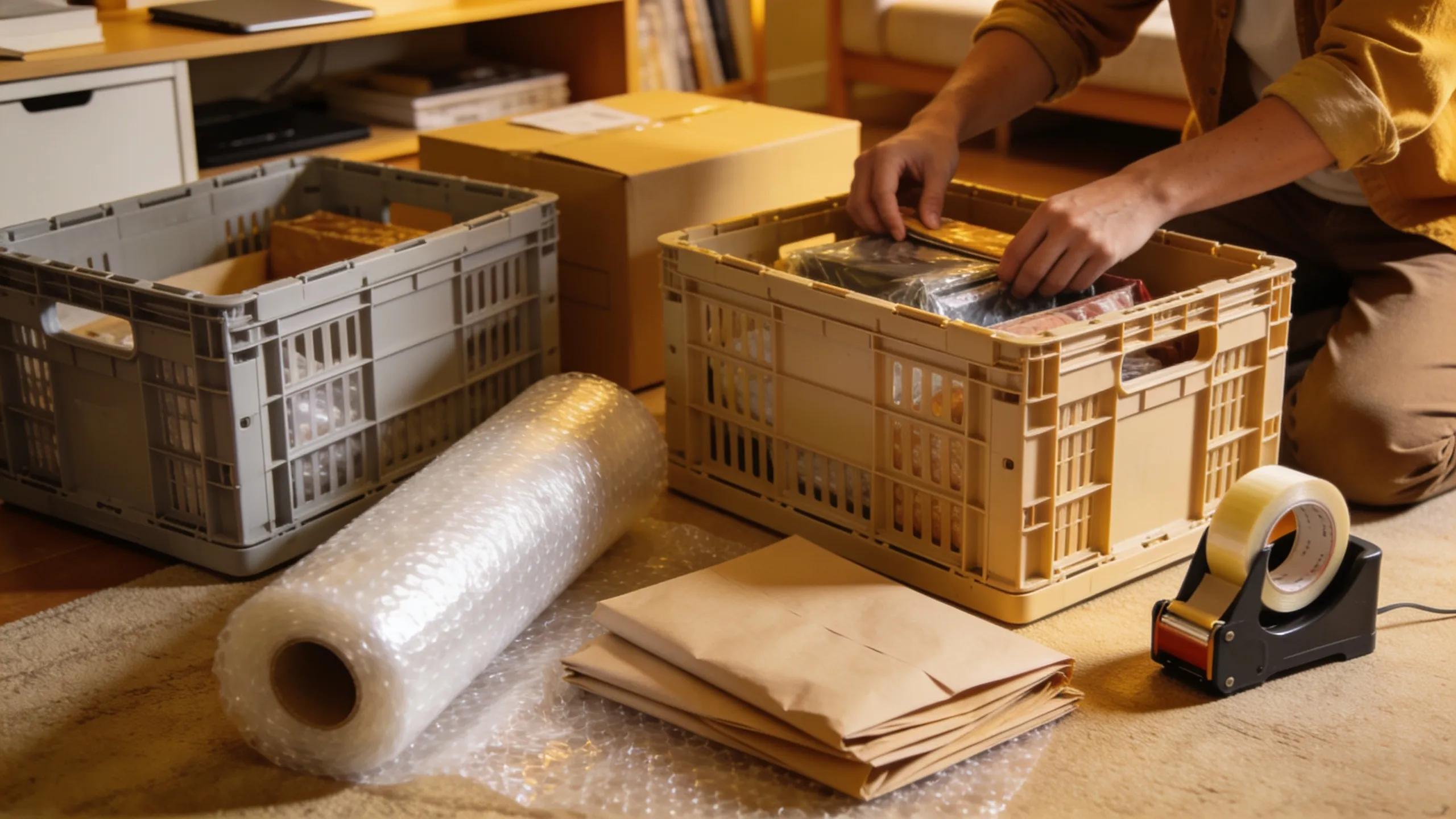
Good packing supplies include bubble wrap, packing paper, foam, and sturdy tape. These materials protect items inside crates and keep contents from shifting while in transit. Keep a small supply of extras on hand for last-minute needs.
Other useful supplies:
Stretch wrap or shrink film to secure lids and keep stacks stable.
Furniture blankets to protect large items and create buffering between crates.
Marker pens, colored labels, and preprinted inventory stickers to speed packing and unpacking.
How to Maximize Stackability and Protect Fragile Items in Crates?
Place heavy items on the bottom and lighter, fragile items on top. Fill gaps with cushioning so nothing moves. Securely close and, when possible, lock or fasten crate lids to keep stacks stable during loading and transport.
Loading tips for truck or van:
Load large, heavy crates first and place them against the truck walls to form a stable base.
Use straps or cargo nets to secure tall stacks and prevent tipping during transit.
Keep pathways clear in the vehicle for safe unloading and to access crates marked as “Unpack First.”
If you have oddly shaped items, use smaller crates to subdivide contents and create flatter stack surfaces rather than forcing a single oversized crate into the load plan.
Should You Rent or Buy Moving Crates? Rental vs. Purchase Benefits and Estimates
Renting or buying depends on how often you’ll use crates and how long you need them. If you’re local to a service area, rental can be especially convenient. For information about availability in specific regions, see ReloCrate’s Colorado service areas.
When to rent: renting is a good option if this is a one-time move, if you need crates for a brief window, or if you prefer not to store unused crates long-term. Rental services often include pickup and return, which saves time.
When to buy: purchase is sensible if you move frequently, need storage solutions, or want long-term reuse. Buying gives you control over crate condition and the ability to adapt them for storage or ongoing transport needs.
What Are Typical Rental Costs and Duration Options for Moving Crates?
Rental prices commonly range from $1 to $5 per crate, depending on size and rental length. Many providers offer flexible rental windows—measured in weeks or months—to suit short- or long-term needs.
Check rental terms for extra fees such as damage charges, cleaning requirements, or late return penalties so there are no surprises on settlement.
When Is It More Economical to Buy Reusable Moving Crates?
If you move frequently or need long-term storage, buying reusable crates can be a smart investment. Retail prices often fall between $15 and $25 per crate, and the durability makes them cost-effective over multiple moves.
Consider where you will store purchased crates between moves. If storage is tight, buying fewer well-selected sizes may be better than owning many bulky crates.
What Are the Eco-Friendly Advantages of Using Reusable Moving Crates?
Reusable plastic crates cut down on single-use cardboard and reduce overall material waste, since they last for many moves. Choosing reusable options supports more sustainable moving practices and reduces the environmental footprint of relocation.
How Do Reusable Plastic Crates Reduce Waste Compared to Cardboard Boxes?
Unlike one-time cardboard boxes that are typically discarded after a move, durable plastic crates can be used again and again, which lowers the amount of material sent to recycling or landfills over time.
What Are Recent Trends in Sustainable Moving Supplies and Crate Adoption?
More movers and companies are prioritizing sustainable options—reusable crates, recycled packing materials, and return-and-refill programs are becoming commonplace as people seek greener moves.
Look for providers that offer pick-up and reuse programs in your area. Returning crates to service programs keeps them in rotation and reduces the need for producing new plastic units over and over.
How Many Crates Are Required for a 2-Bedroom or 3-Bedroom House?
As noted above: a 2-bedroom generally needs about 20–30 crates, and a 3-bedroom typically requires roughly 30–40 crates. Use these ranges as starting points, then adjust for lifestyle factors such as collections, hobbies, or home office equipment.
How to Use Moving Crate Calculators and Guides to Estimate Your Crate Needs?
Online calculators guide you through each room and common item types to produce a tailored estimate—use one to fine-tune your crate count based on what you actually own.
To use a calculator effectively:
Enter the number of rooms and any specialty areas (garage, attic, office).
Specify large items that will not go in crates (furniture, pianos, built-ins).
List collections or high-volume categories like books or kitchenware so the calculator can allocate appropriate crate sizes.
What Online Tools Help Calculate Moving Box Quantities by Room?
Several websites and moving services offer room-by-room calculators. Enter the number of rooms and the types of items you have to get a practical crate estimate for your move.
Combine estimates from multiple tools to create a conservative ordering strategy: pick a mid-range number from the different calculators, then add a small buffer for last-minute items.
How to Integrate Packing Supply Calculators with Moving Crate Estimates?
Combine crate calculators with packing supply estimators to plan not only how many crates you’ll need but also how much bubble wrap, tape, and padding to order—this prevents last-minute trips for supplies.
Example: for every 10 medium crates, consider ordering a roll of stretch wrap, a small box of packing paper, and a couple of rolls of strong tape. If you have many fragile items, add extra cushioning materials and dish packs for plates and glassware.
Frequently Asked Questions
What alternative uses do moving crates have beyond moving?
Moving crates are handy for more than moving: they make excellent storage bins in garages, basements, and closets; organize seasonal decorations or sports gear; and serve schools or community events for transporting supplies. Their durability and stackability make them versatile around the home and workplace.
Can moving crates be stacked, and how can I ensure their stability?
Yes—moving crates are designed to stack. For safety, put heavier crates on the bottom and lighter ones on top, make sure lids are fastened, and avoid overloading crates beyond their recommended capacity to keep stacks stable in transit.
What is the best way to clean and maintain reusable moving crates?
Cleaning is simple: rinse with warm, soapy water and use a soft brush for tougher spots. Let crates air dry completely before storing to prevent moisture build-up. Store them in a dry place to extend their life.
Are there any special considerations for packing electronics in moving crates?
Yes—protect electronics with bubble wrap or foam, and whenever possible pack them in their original boxes. Keep cables and accessories in labeled bags or small crates so everything stays together and easy to set up at your destination.
When packing sensitive equipment, include a simple checklist in the crate: device, power cable, adapters, and any manuals. Label each bag of cables with a short note so you don’t have to untangle or hunt for the right cords after arrival.
How should I handle hazardous materials during my move?
Hazardous materials like certain chemicals, paint, and flammable items require special handling and are often restricted by moving companies. Check local regulations, consider proper disposal, and consult professionals if you’re unsure—safety should always come first.
For safe handling: separate hazardous items well before moving day, follow local disposal guidance for paints and chemicals, and do not pack these items with everyday household goods.
What filing systems can I use for organizing my moving crates?
Use a simple numbered or color-coded system: label crates by room and number (e.g., Kitchen 1, Kitchen 2), and keep a short inventory list that maps numbers to contents. This makes it easy to find essentials and track items during the move.
Additional filing tips:
Maintain a master list (digital or printed) that records crate numbers, room destination, and key contents.
Use smartphone photos of crate labels and contents as a quick reference while unloading.
Consider a shared document if multiple people are helping so everyone sees the packing plan in real time.
Conclusion
Estimating the right number of moving crates makes a big difference in how smooth your move goes. Use this room-by-room guide to plan, then tweak based on your possessions and priorities. If you’d like personalized help choosing crate sizes or quantities, reach out to our team or browse our selection. Plan ahead, pack smart, and make your move as stress-free as possible.
Final checklist before ordering crates: walk each room, tally likely crate counts, decide which items you will pack yourself versus leaving to professionals, and reserve a small extra number of crates to cover late finds. With a clear plan and labeled crates, moving day becomes far more manageable and far less stressful.
Simplifying your estate moves is possible with a color-coded system. These eco-friendly tips make packing and organizing effortless while reducing waste.
Seniors in Denver can streamline their move with eco-friendly downsizing solutions. Experience convenient, sustainable options for a stress-free relocation.
Eco-friendly packing for DU students made easy with Fast Crate Solutions. Enjoy stress-free relocation while supporting sustainability in the Denver community.