Discover Denver's Plastic Moving Crates
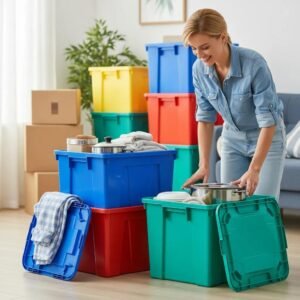
Plastic moving crates are sturdy, reusable containers designed specifically for packing, transporting, and storing household and commercial items during moves. This article explains what plastic moving crates are, why they often outperform traditional cardboard during Denver moves, realistic cost expectations for rentals, and exactly where and how to rent them in the Denver Metro area. Many renters and students struggle with soggy cardboard, time-consuming taping, and waste after a move; reusable plastic crates provide a weatherproof, stackable alternative that simplifies packing and reduces landfill waste. After describing the technology and practical benefits of crates, this guide breaks down the main advantages of renting versus buying, shows illustrative rental kit examples, and walks through local ordering, delivery, and pickup processes. For university students facing frequent short-term moves and storage needs, Relocrate’s essential kits are presented as a targeted solution that streamlines dorm and shared-housing moves while supporting sustainability goals.
What Are Plastic Moving Crates and Why Are They Ideal for Denver Moves?
Plastic moving crates are interlocking, stackable containers made from durable, often recycled plastic designed to replace single-use cardboard boxes when moving. These crates work by providing rigid walls, uniform sizing, and secure stacking, which improves loading efficiency, protects contents from moisture and crushing, and simplifies transport on dollies and in vans. For Denver moves—where sudden weather changes, multi-story walk-ups, and frequent student turnover are common—crates reduce the risk that belongings will get wet, crushed, or lost during short transfers between housing. Understanding the technical features and practical impacts of crates helps explain why many people choose crate rental for urban and student moves in the region.
Different crate features translate directly into practical benefits for movers in Denver.
| Crate Specification | Feature | Practical Impact |
|---|---|---|
| Material | Recycled, impact-resistant plastic | Resists moisture and punctures during Colorado weather swings |
| Load Capacity | Uniform rated weight per crate | Predictable stacking and safer handling on dollies |
| Stackability | Interlocking design | Maximizes van space and stabilizes loads on stairs |
| Size Uniformity | Standard cubic dimensions | Speeds packing/unpacking and fits shelving/dorm closets |
How Do Plastic Moving Crates Compare to Traditional Cardboard Boxes?
Plastic moving crates outperform cardboard boxes in several practical measures, including durability, moisture resistance, and reusability during repeat moves. Cardboard is inexpensive up front but requires assembly, taping, and disposal costs that add time and hidden expense; crates arrive ready to use and eliminate tape, which saves time and waste. Crates are also sanitary and easy to clean between uses, making them preferable for shared housing and student dorms where repeated turnover increases contamination risk. Because crates stack uniformly and are compatible with standard dollies, they reduce loading time and damage during transit, which matters in urban moves with stairs and tight elevators.
- Cardboard boxes are cheap to buy but require tape and produce waste after one or a few uses.
- Plastic crates are pricier per unit if purchased, but when rented they remove disposal and assembly costs.
- Cardboard can fail in wet weather, while plastic crates remain dry and structurally sound.
This comparison sets up why many movers prefer renting reusable crates for both efficiency and reduced environmental impact.
What Features Make Plastic Moving Crates Durable and Eco-Friendly?
Plastic moving crates rely on impact-resistant, often recycled polymers and reinforced ribbing to maintain shape and protect contents under load and during rough handling. Reuse cycles are a core eco advantage: a single reusable crate can replace dozens of single-use cardboard boxes over its lifespan, reducing raw material demand and landfill volume. The nonporous surfaces of plastic crates make them easy to clean and disinfect between rentals, improving sanitation across high-turnover moves and shared accommodations. Because crates stack uniformly and eliminate tape and single-use packing materials, they simplify waste reduction strategies and support a lower total-carbon approach to moving when combined with delivery logistics designed for multiple customers per route.
These material and lifecycle attributes explain why crates are both a durability upgrade and an environmentally preferable alternative for repetitive moving scenarios, which leads into the user-facing benefits of renting them.
What Are the Key Benefits of Renting Reusable Moving Crates?
Renting reusable moving crates delivers clear benefits across time savings, cost control, protection, and sustainability for residents and businesses in Denver. Renters avoid assembly and disposal, which shortens packing and move-out timelines and removes the need to source and recycle large volumes of cardboard. The stackable, uniform design of crates speeds loading and unloading and reduces damage risk, translating into fewer replacement costs for broken or water-damaged items. Environmentally, rentals keep single-use boxes out of landfills and reuse recycled materials as part of a circular moving solution, aligning with sustainability goals common among students and eco-conscious households.
| Benefit | Measure / Example | How Reusable Crates Deliver |
|---|---|---|
| Durability | Resistance to moisture and crushing | Rigid walls and recycled plastic maintain integrity in bad weather |
| Time Savings | Minutes per box saved on assembly | No taping or folding required; crates stack for fast dollies use |
| Environmental Impact | Fewer boxes in landfill per move | Reuse cycles replace dozens of single-use boxes |
| Cost Predictability | All-in rental pricing vs ad-hoc supplies | Rentals bundle delivery/pickup and eliminate disposal fees |
This table highlights direct metrics and practical outcomes that renting crates provides, and the next subsection examines how those time savings manifest during a move.
How Do Plastic Moving Crates Save Time and Effort During Moving?
Plastic moving crates shave hours off the average move by removing assembly and tape steps, enabling faster packing and more efficient loading patterns. Because crates are uniform and stackable, movers can load dollies with several crates at once and move full stacks into vehicles, speeding trips between doorways and trucks and reducing round-trips. Reusable labels or color-coded crate systems accelerate unpacking since students and renters can place labeled crates directly into rooms or closets, cutting the hours normally spent sorting and searching through loose boxes. These operational efficiencies are especially valuable during high-pressure windows like weekend move-ins or when coordinating with building elevator reservations.
A concise list makes the time-saving mechanisms easier to visualize.
- No assembly or taping speeds packing by eliminating repetitive tasks.
- Stackable crates allow multi-crate dollies moves for fewer trips.
- Reusable labeling simplifies targeted unpacking and room placement.
By summarizing these mechanisms, the reader can see how time savings translate into less stress and faster move completion, which naturally connects to the cost and sustainability advantages described next.
Why Are Plastic Moving Crates a Cost-Effective and Sustainable Choice?
When evaluating total move cost, renters should include purchase price, tape, packing materials, disposal fees, time spent assembling, and potential replacement of damaged items; reusable crate rental consolidates many of these costs into predictable fees. For repeat movers—students, renters, and small businesses—renting crates often becomes cheaper over multiple moves because the rental fee covers delivery, durable containment, and pickup, avoiding repeated purchases and disposal. Sustainability adds economic value indirectly: reduced waste and lower time requirements can cut incidental expenses like dumpster rental, disposal fees, and the labor cost of cleanup. Taken together, crates provide both direct and hidden savings that conventional cardboard rarely matches unless you factor in reuse practices and recovery logistics.
To illustrate these trade-offs, consider how rental bundles and lifecycle benefits influence the break-even point compared with buying single-use boxes.
- Rental consolidates delivery/pickup, which reduces transport and disposal overhead.
- Repeat moves quickly amortize rental fees versus purchasing new cardboard each time.
- Reduced damage and moisture losses lower replacement costs for fragile goods.
These financial and environmental angles make a compelling case for renting crates in contexts with frequent moves or where sustainability is a priority.
How Much Does It Cost to Rent Plastic Moving Crates in Denver?
Rental pricing depends on kit size, rental duration, delivery distance within the Denver Metro area, and any bundled accessories such as dollies and labels. Typical pricing models use tiered kit packages tailored to common move sizes—studio, one-bedroom, and two-bedroom—each including a specified number of crates plus helpful accessories and bundled delivery/pickup to keep costs predictable. Below is an illustrative offer-style table showing common kit configurations and recommended uses; these examples are representative and meant to help estimate costs rather than serve as exact quotes.
This table outlines example kit compositions and suggested applications for renters to use when planning.
| Kit | Includes | Suggested Use |
|---|---|---|
| Studio Kit (example) | 20 crates, 1 dolly, label set | Single-person studio or minimal furnishings |
| 1-Bedroom Kit (example) | 40 crates, 1 dolly, label set | Typical one-bedroom apartment move |
| 2-Bedroom Kit (example) | 60 crates, 2 dollies, label set | Family or shared two-bedroom move |
These illustrative kits demonstrate how package sizing simplifies budgeting and reduce the need to tally individual box counts; the next subsection presents how Relocrate positions its kit options as a practical example for Denver renters.
What Are Relocrate’s Pricing Options for Essential Moving Kits?
Relocrate provides bundled, all-in kit options designed to match common move sizes and needs, with delivery and pickup included within the Denver Metro area. Their essential kits are structured to bundle a recommended number of reusable crates plus practical accessories—dollies and label sets—to streamline moves and reduce hidden costs associated with tape and disposal. Because Relocrate emphasizes cost-effective, all-in pricing and free delivery and pickup as part of its service model, customers gain predictable moving expenses and minimize the logistical overhead of returning or disposing of packing materials. These kits are especially useful for students and renters who benefit from simple, repeatable packages tailored to small-unit moves.
Below is a short list summarizing what to expect from a Relocrate kit offering.
- Packaged kits include crates sized for dorm rooms and apartments with accessories to speed moves.
- Delivery and pickup are bundled to reduce coordination and hidden fees.
- Suggested kit sizes align with studio, 1-bedroom, and 2-bedroom moves for straightforward planning.
This description leads into a cost comparison that helps readers decide whether renting or buying is the better option for their situation.
How Does Renting Plastic Crates Compare to Buying Cardboard Boxes in Cost?
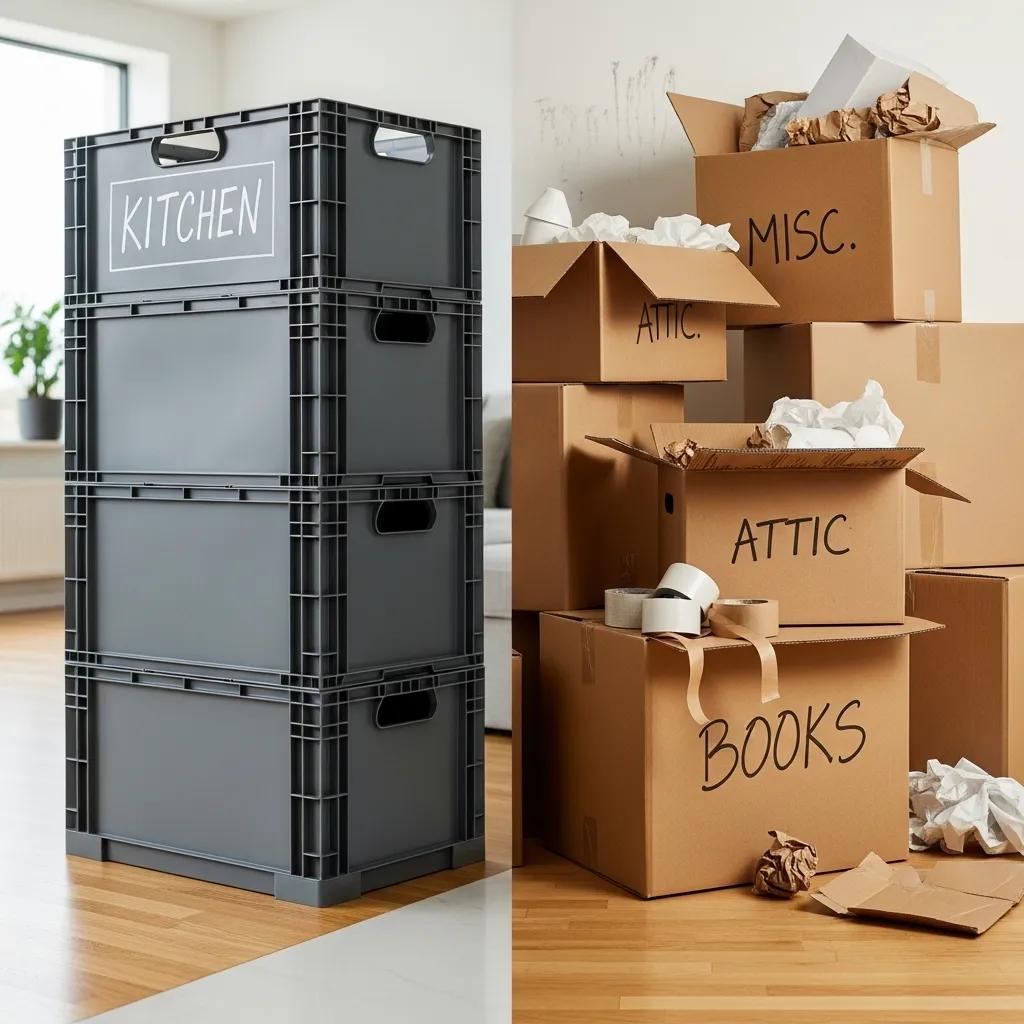
A fair cost comparison includes purchase price of boxes, tape and packing supplies, time spent assembling, disposal costs, and the likelihood of replacing damaged items. Buying cardboard appears cheaper for a single, small move if you accept the time and disposal burden, but when accounting for labor, waste removal, and potential weather-related losses, renting often becomes cheaper or at least more predictable. For students who move multiple times over an academic year or for families who relocate periodically, rentals reduce repeated purchases and the administrative burden of recycling or disposal. Intangible savings—less hassle, lower damage risk, and faster move-ins—also carry monetary value that conventional purchasing rarely quantifies.
A short bulleted cost breakdown clarifies the main components to consider.
- Cardboard purchase: upfront low cost but includes tape, padding, and disposal responsibilities.
- Renting: higher upfront rental fee but often includes delivery/pickup, accessories, and predictable total cost.
- Break-even scenarios: frequent movers and those in wet climates reach parity faster due to avoided replacement and disposal costs.
Understanding these components helps readers identify the most cost-effective option based on move frequency and local logistics.
Where Can You Rent Plastic Moving Crates in Denver?
Renters in Denver can access local crate rental services that operate across the Denver Metro area, providing a simple process for ordering, delivery, use, and pickup coordinated around move schedules. The local rental supply model emphasizes route-based delivery and pickup to maintain environmental efficiency and offer customers predictable windows for drop-off and collection. To rent, customers typically select a kit size, schedule a delivery window, use the crates for the agreed rental period, and then arrange for pickup—this straightforward flow reduces hands-on logistics and minimizes the need for storage or disposal. Below are practical steps and expectations for renting in the region that highlight what to prepare and what to expect on delivery and pickup days.
A clear step list helps movers visualize the typical rental process from selection to return.
- Choose a kit based on your home size and anticipated packing volume.
- Schedule delivery within the Denver Metro service area and confirm a pickup window.
- Use the crates for packing, transport, and storage during your rental period.
- Leave crates for scheduled pickup so the rental provider can collect and sanitize them.
These steps outline the typical renter experience and transition into specifics about Relocrate’s delivery and pickup features in the next subsection.
What Are the Delivery and Pickup Services Offered by Relocrate?
Relocrate offers delivery and pickup services across the Denver Metro area and includes free delivery and pickup as part of its service model, which simplifies logistics for residential and student moves. The service model emphasizes convenience by coordinating scheduled drop-off and collection windows so renters can plan moves without extra transport or disposal work. On delivery days, customers should prepare a clear access point and confirm placement instructions; on pickup days, leaving crates stacked or in a specified area speeds collection and avoids missed windows. These service features reflect Relocrate’s mission to provide a sustainable, hassle-free moving experience that reduces the friction commonly associated with one-time moving supplies.
This operational overview provides practical expectations and naturally leads into the ordering steps for Relocrate’s rental kits.
How Do You Order Relocrate’s Plastic Moving Crate Rental in Denver?
Ordering Relocrate’s rental kit follows a simple sequence: select an essential kit size that matches your move, schedule delivery within the Denver Metro area, use the crates for the rental period, and finalize pickup scheduling for returns. When preparing to order, consider the number of rooms, typical belongings, and whether accessories like dollies and labels are needed; choosing the correct kit reduces last-minute changes and ensures timely delivery. Payment and scheduling details are confirmed during booking, and renters should note any building access requirements or elevator reservations to share ahead of delivery. This straightforward process minimizes coordination work and keeps the focus on efficient moving rather than sourcing and disposing of temporary packing materials.
A concise checklist helps summarize the actionable ordering steps.
- Select kit size based on inventory and storage needs.
- Schedule delivery window and communicate any access constraints.
- Use crates during the rental period and prepare them for pickup on the agreed date.
- Leave crates accessible for free pickup to complete the rental cycle.
These instructions make renting predictable, which supports students and busy households planning move logistics.
What Special Solutions Does Relocrate Offer for University Students?
University students face unique moving pain points: frequent short-term moves between dorms and apartments, limited storage space, tight move-in/out windows, and high sensitivity to cost and convenience. Relocrate’s essential kits are tailored to those needs by offering compact crate counts that fit dorm closets and shared storage areas, stackable designs that maximize small living spaces, and bundled delivery and pickup that eliminates the need to manage disposal between terms. Because Relocrate acquired Simply Box’d and focuses on student-centric service bundles, their kits prioritize practical accessories such as dollies and reusable labeling to accelerate packing and unpacking during peak academic move seasons. These student-focused features reduce the friction of seasonal moves and free students to focus on school rather than logistics.
The next subsection describes how those kit features translate into day-to-day advantages for students on move day and during storage periods.
How Do Relocrate’s Essential Kits Address Student Moving Challenges?
Relocrate’s essential kits solve common student moving problems by combining the right crate counts with practical accessories and included delivery/pickup so students avoid buying, storing, and disposing of single-use boxes. Compact crate sizes fit under beds, in closets, and in compact dorm alcoves, while stackability makes it possible to store semester belongings without bulky waste. Reusable labels and a consistent crate system speed move-in and move-out days, allowing students to place entire labeled stacks into rooms and unpack by label rather than rummaging through mixed boxes. For short-term storage between terms, crates protect belongings from moisture and pests and are easy to relocate or stack in shared storage rooms.
A simple packing tip list highlights student-specific advantages.
- Use color-coded labels to assign crates to specific rooms or roommates for fast unpacking.
- Pack electronics in smaller crates with padding to prevent shifting during transport.
- Stack seasonal bedding in labeled crates to free closet space in dorm rooms.
These practical tactics demonstrate how essential kits reduce time, protect belongings, and simplify semester transitions without adding disposal burdens.
What Are the Advantages of Using Plastic Moving Crates for Student Moves in the UK?
Although Relocrate operates in Denver, the advantages of plastic moving crates transfer to student moves in the UK and other markets because the core problems—limited dorm space, frequent moves, and waste reduction—are universal. Reusable crates provide the same benefits overseas: stackable storage for small rooms, sanitation and moisture protection in variable climates, and simplified move logistics that reduce time spent on packing and disposal. UK students should look for local providers offering similar bundle features—compact kits, included delivery/pickup, and accessories like dollies and labels—to replicate the conveniences described here. This transferable thinking helps students and parents choose efficient local solutions that mirror the benefits available in Denver.
These universal benefits guide international students and families to seek comparable services where Relocrate does not operate, closing the loop between topic guidance and practical action.
What Are Common Questions About Plastic Moving Crates?
Common questions about plastic moving crates typically focus on environmental impact, protection of belongings, cost-effectiveness, and where to rent locally; concise answers help readers decide quickly. Reusable crates reduce single-use waste and are easy to sanitize, protecting both items and downstream recycling streams when compared with disposable cardboard. Crates’ rigid structure prevents crushing and moisture damage, making them especially suitable for electronics, books, and clothing during moves. For renters in Denver, local providers that include delivery and pickup in the Metro area simplify logistics and reduce hidden costs, making rentals a compelling choice for students and frequent movers.
The following short FAQ-style responses address the most frequent concerns with clear, actionable information.
- Reusable crates reduce landfill waste by replacing multiple single-use cardboard boxes and often use recycled plastic in their construction.
- Rigid walls and stackability protect fragile items and reduce shifting during transport compared with irregularly filled cardboard.
- Included delivery and pickup services keep rental costs predictable and remove the need for disposal logistics after a move.
The final two subsections expand on environmental benefits and protective qualities in more detail.
What Are the Environmental Benefits of Using Reusable Moving Boxes?
Reusable moving boxes reduce the volume of single-use cardboard sent to landfills, and when made from recycled plastic they close material loops by reusing post-consumer materials. Fewer new cardboard boxes manufactured per move means reduced demand for virgin fibers and lower lifecycle emissions associated with box production, especially when rental fleets are circulated efficiently by providers using consolidated delivery routes. Reusable crates also cut the need for tape and additional packing materials, which further decreases waste streams and eases recycling burdens on campus and municipal systems. These environmental benefits align with broader sustainability goals for students, households, and organizations seeking lower-impact moving practices.
A brief summary reinforces why lifecycle thinking matters for move decisions.
- Reuse cycles and recycled materials reduce raw material demand.
- Consolidated delivery routes and pickups lower per-move transport emissions.
- Eliminating single-use tape and boxes decreases post-move waste handling.
This lifecycle perspective helps readers weigh environmental impact alongside convenience and cost.
How Do Plastic Moving Crates Protect Your Belongings During a Move?
Plastic moving crates protect belongings through rigid, reinforced walls that prevent crushing, interlocking stackability that stabilizes loads and reduces shifting, and water-resistant surfaces that keep contents dry during rain or snow. The crates’ uniform sizing also reduces the chance of overfilling and provides consistent cushioning space for fragile items when combined with minimal padding, which is easier to manage than irregular cardboard shapes. Because plastic surfaces are nonporous, crates are simple to clean and sanitize between uses, reducing contamination risk for textiles and shared items in dorms or shared housing. Packing best practices—placing heavier items low, using padding for electronics, and labeling by room—combine with crate design to maximize protection and reduce in-transit damage.
This protective profile makes crates especially useful for repeat movers and those transporting delicate personal items, completing the set of practical considerations covered in this guide.